Category Archives: inspiration

Hope For Dinner 2015

Hope for Dinner

In poking around for information this week, I ended up finding a new favorite verse:

Isaiah 58:6-9
“Is not this the kind of fasting I have chosen: to loose the chains of injustice and untie the cords of the yoke, to set the oppressed free and break every yoke? Is it not to share your food with the hungry and to provide the poor wanderer with shelter—when you see the naked, to clothe them, and not to turn away from your own flesh and blood? Then your light will break forth like the dawn, and your healing will quickly appear; then your righteousness will go before you, and the glory of the Lord will be your rear guard. Then you will call, and the Lord will answer; you will cry for help, and he will say: Here am I.”

I don’t practice literal fasting – the principle of skipping a meal (or meals) to dedicate yourself to prayer – very often. Honestly, I become a total crab, and I don’t find that fasting from food creates any more space in my day to devote to prayer. It’s much more effective for me to fast from social media or TV – things that I usually waste time on. But this verse was eye opening for me. It reminds me of a famous quote from Gandhi, who said “live simply so others may simply live.” That’s the kind of fasting I can really get behind!

And that’s the idea behind Hope For Dinner.

For the week before Thanksgiving (November 16-20 this year), our entire church and families across the country will be trading their normal evening meals for simple rice and beans. Every evening. All week. Hope for Dinner (a fundraising arm of Venture Expeditions) says that by having rice and beans for dinner the average American family saves $4 – per person – per meal. So for my family of 3 that’s $12 per dinner times 5 days equals $60. It might not sound like a lot, but Venture, whose overhead is donated so that every penny coming in can go to feeding the hungry, can take $60 and turn it into 600 meals for starving children in some of the world’s hardest to reach areas.

I posted briefly about Hope for Dinner last year, too, and included some different ways that you can participate even if rice and beans is not your thing. Participating in Hope for Dinner last year was one of the inspirations behind my family’s weekly Food Shelf Friday. Another friend of mine feeds her family rice and beans every Monday night so they can start their week with awareness of how many people around the world live. It’s a beautiful kind of fast that loosens the chains of injustice and unties the cords of the yoke…feeds the hungry and provides for the poor.

Please join us in having Hope for Dinner this year! You can send your savings directly to Hope for Dinner via their website, so give it through Riverdale Church or Emmanuel Christian Center with the envelope and/or check memo marked “Hope for Dinner.”
http://www.hopefordinner.org
http://www.venture.org

Understanding Water Inequality

Water Inequality

Thank you all for your patience this past week as I took my first week off from the blog. I had a wonderful time at a retreat with great friends in the stunning peak fall colors.

Today I’m introducing a topic that has been on my list since day one – Water Inequality. The two most important things that a person needs to survive are food and water. They work hand in hand to regulate body systems and provide fuel for everything one does. But in many parts of the world, there is little access to water and/or the available water is dangerously unsanitary. In some areas, people (usually women and older children) walk MILES every day to bring back whatever water they can carry from the nearest river or well. This stunts many areas of economic and medical progress as water is needed for growing crops, caring for livestock, sanitation, and human consumption, and one person can only carry so much.

water map

(Water map from unep.org – United Nations Environmental Programme)

As you can see from this map, access to water looks a lot like access to food, sanitation, economic opportunity, and education. The United States, Europe, and Australia are well provided for, and Central Africa and parts of Asia suffer the most. I’m not an environmental expert or an economist, but it seems pretty obvious to me that those things are connected. What is less clear to me is which came first – the chicken or the egg, so to speak.

At it’s most basic, access to clean water is a matter of simple geography. Here in Minnesota we have well over 10,000 lakes, including giant Lake Superior. There is no lack of water here. But it isn’t entirely that simple. There is desert in Africa, but there is desert in the American southwest as well, and yet Arizonans have access to safe drinking water. They ration more than Minnesotans, but they don’t suffer like the people in the yellow and red sections of that map. Infrastructure like wells, pipelines, and water treatment facilities are vital.

With geography and/or infrastructure in place, there are still hurdles to water access. Corrupt régimes know how vital water is and there are stories of soldiers blocking access to wells in retaliation or in effort to control the people. Lack of education is a problem as well. Uneducated peoples do not understand the importance of sanitation and water purification. In societies where survival is a battle, people do not have the means to hold out for cleaner water.

So here in the comfortable U.S. what does water inequality mean to us?

First, awareness of finite resources should spur us to make better choices about our water consumption. Shut off the water while you brush your teeth. Limit your shower times. Don’t overwater your lawn or run the dishwasher half empty.

Second, support efforts to create water access for all. Encourage your representatives to defend human rights around the world. Get involved in charities that dig wells and educate. A number of these organizations exist. Consult one of the charity rating sites to find a good organization.

There is always a lot of talk in the media about human rights and which provisions are basic human rights. Protesters like to use that language in their signs, “X is a basic human right!” Is it food? Affordable health care? There is no doubt that clean water is necessary for human existence, so in my mind that makes it, along with access to safe food, a basic human right. Does that mean I think food and water should be free? Not really. People don’t value free things. In crisis, free is important; the need is urgent and temporary. In the day to day, having life’s necessities available, safe, and affordable while ensuring people’s physical safety sets up a system where people can have basic human rights and where they will respect and not waste these vital building blocks of life, health, and society.

What do you think? Have you ever experienced the lack of clean water or been involved in raising money for water infrastructure? What was your experience like?

Follow Along: Using Social Media to Advance the Cause of Hunger Relief

Follow Along - Social Media

Today I have some thoughts for you on using social media to advance the cause of bloggers, companies, and organizations that are fighting hunger.

  1. Follow Food Shelf Friday on Facebook, Twitter, and/or WordPress. I’m only half joking here. My point is not actually to get you to follow me, but to say that bloggers and non-profits pay attention to their follower counts. If your favorite blogger wants to write a book (not me, your other favorite blogger. Writing a book is not on my horizon yet), prospective publishers WILL be looking at how many social media followers they have. They want to know what size audience comes along with this writer. The same is true for other things your bloggers and orgs want to do, like linkups with other blogs, interviews with well-known people or organizations, or soliciting donations for their cause. So if you appreciate a blogger or organization, follow and like liberally.
  2. Use social media to make your values known. Note I did not say to “cram your values down everyone’s throat.” There is a difference, and because “cramming” is usually about what you’re against, you may actually be helping what you oppose. What I’m talking about is visiting websites, Google searching terms, or leaving comments that indicate what you value. Trust me, the people at Google and industry insiders know how often someone looks for information on the Kardashians, gluten-free recipes, or fair trade coffee, and as long as they generate buzz they’ll be around. Even people who dislike/mock them get counted, because there is no such thing as bad publicity, as the old saying goes.So there are two things you can do with this information: first, if you dislike something, don’t click on the gossip about it, comment on it, etc. because you’re contributing to the buzz that keeps it around. Save your negative feedback for the real life people you influence. Second, if you do like something, Google it. Lately I’ve been looking for fair trade clothing in women’s plus size, and fair trade tennis shoes that you would actually wear to workout (seriously, if you know of any, leave a comment!). So I Google it, I use it as a search term on Amazon, I look for it on Pinterest, etc. If enough of us are looking, manufacturers will know that there is a market for it and will (hopefully!) step up.
  1. Use social media to find more things to love. Last week I found an organization that fights hunger here in Minnesota. This led me to see who they were following on Twitter, and suddenly I found a bunch of local organizations and individuals who care about the hungry. I followed some of them, they followed back, and I found myself part of a community of people and organizations that can make a huge difference when we work together. So follow those rabbit trails to find even more inspiration and community.

  2. Use social media to communicate with companies. I have bought shirts in the past from Sevenly. They make cool tees, and every sale benefits the week’s featured charity. One week they were featuring a charity that provides employment opportunities, and it got me thinking – Sevenly benefits all these organizations, but what about the shirts themselves? Am I contributing to child sweatshop labor in order to give a few dollars to another organization? So I went on Twitter and sent a tweet to Sevenly asking about the shirts themselves. As it turns out, their manufacturing is all fair trade and ethical. I would not have known that without social media, and my tweet allowed others to see this additional good reason to shop Sevenly. Most companies and organizations respond fairly quickly on Twitter, and some will reply to Facebook comments. It’s a lot more productive than waiting on hold for a company representative who may or may not be able to help you.
  3. Your friends and followers are your audience, what do you want them to see? Share and retweet to help the world’s good things gain a bigger audience!

Additional thoughts on using social media to advance the cause of hunger relief? Share it in the comments!

How to Focus Your Giving for More Impact and Less Guilt

How to Focus Your Giving

Years ago, I struggled to find my passion and my place in this world and in the kingdom of God. I was still involved in helping out here and there and giving a little to this and that, but I felt like my meager efforts were spread so thin, and I wasn’t sure I was making an impact anywhere. I prayed for God to give me a specific passion, something to focus my efforts to multiply my impact. I actually sat down and made a list of all the things I was involved in and all the things I really cared about. That thought and that exercise were part of my journey, and as my passion for hunger began to reveal itself to me, that thought about spreading or concentrating efforts stuck with me.

So I have introduced you to a number of programs and organizations that are helping the hungry, and there are many more to come. But I don’t want that to become overwhelming to you. I don’t volunteer or donate to every hunger cause, and I don’t automatically say no to every non-hunger thing that comes up. So in the interest of transparency I’m going to let you in on what I actually do for those in need. I hope it helps you clarify your mission and learn to say yes or no with confidence instead of guilt.

First, as a Christian I believe that I am called to give 10% of my income to the support of the church (Malachi 3:10, Leviticus 27:30, Deuteronomy 14:22). Some people accept this responsibility but include their other charitable giving in this number, and some think that tithing went out with the Old Testament. They both make good points, truly, and I don’t condemn anyone who sees this differently than I do. But if people are tithing by giving to a different charity or not tithing because they no longer feel obligated, how will the church survive? Because I believe in my church, because I want to live a more generous life, and because I see it in the Bible, I have chosen to give the first 10% of my income to my local church. In my heart AND in my checkbook I am invested in my church.

For us, that’s the big one. But there are smaller things we do on a regular basis or on occasion. We have a sponsored child through Compassion International. That costs us a mere $38 a month, and it lets us invest in the life of one individual. We also keep mini M&M tubes to collect quarters for Feed My Starving Children. When they’re full, we schedule a time to go pack meals at their facility and swap out our full tubes of quarters for new empty tubes.

And of course there’s Food Shelf Friday. Every Friday night (or another night if Friday doesn’t work) my family exchanges our regular meal for a simplified meal like food shelf users receive. The experience makes us more thoughtful donors (aware of things like protein sources and sodium overload in canned foods), and the savings allows us to donate the identical meal. I collect our Food Shelf Friday duplicate meals in grocery bags in my home office. When the bags are full I take them to my church’s food bank. Sometimes I donate it somewhere different. The Scouts and the mail carriers both hold door to door food drives. In October I’ll probably be giving it to another food shelf, as I am hoping to do a tour and interview for the blog, and in December I’ll bring my stash to work for the food drive we do at our annual community Christmas event.

So that is my family’s regular giving plan: tithe, Compassion sponsorship, quarters and volunteer packing for FMSC, and Food Shelf Friday. We also chip in now and then to one-time things like the recent Convoy of Hope event, or last fall’s Hope For Dinner. When we can, we give a little for school and sports fundraisers, benefits, and pancake breakfasts. Those things are kind of hit and miss and I don’t really think of them as giving as much as just being part of a community. When asked to donate or participate in something, my first consideration is if I can afford to do that without sacrificing my commitments. Second I ask myself if it will advance the kingdom of God, meet the actual physical needs of people, or help build my local community, because those are the things that matter most to me. This allows me to confidently say yes or no depending on my resources and priorities.

I hope this post helps you in two ways:
First, I hope it helps as you see many FSF posts about different programs and organizations to know that I don’t give to everything. I like to share about these organizations because it might be one that you want to participate in, and also just to give us all hope and faith in humanity by hearing about all the people and organizations that are out there doing good work for the poor.
Second, I hope that it helps you evaluate your passions and priorities so you can focus your efforts, giving to and volunteering with quality organizations that share your values and priorities.

Leave a comment – share the causes you’re passionate about and the organizations you love!

Food Shelf Friday’s Fair Trade Favorites

Fair Trade Favorites

Fair Trade: An international trade arrangement in which the producers in developing nations are paid a fair price for their products, thus reducing poverty, unethical treatment of workers, and environmental degradation.

If I had unlimited resources, I would buy everything organic and fair trade. I hate the reality that Central American banana workers are being paid a pittance to work long days up to their elbows in pesticide residue processing my bananas, that most cocoa growers have never tasted chocolate, and that my $100 sneakers cost only four cents in labor and were probably made by a child.

Our artificially cheap consumer goods come with a high price.

But day-to-day, right here in my own home, It’s hard to take the price hike that comes with moving from non-organic to organic produce and from bargain shopping to fair trade. We have spent our whole lives with these artificially low prices, and sometimes even they’re too much for us. So how do we move from being part of the problem to part of the solution?

There are two ways. One of them will cost you more money, and one will save you money (And if you do both, it will reduce the burden of the expensive way). Are you ready?

  1. Buy fair trade and organic products as much as possible.
  2. Choose to buy less, and reduce, reuse, recycle.

That’s really simplistic, I know. But it’s a start. When you’re shopping, ask yourself if you really need another purse. Buy fair trade gifts. Shop second hand as a means of reducing the burden on both underpaid labor and our landfills.

This is a super brief intro to the topic of fair trade, but I think most people are familiar, and what I really want to do today is introduce you to some of my fair trade favorites.
4815821f5eed207df868e6943cbb75df BR040EN-tangled-beads-bracelet-z 1. Noonday Collection:
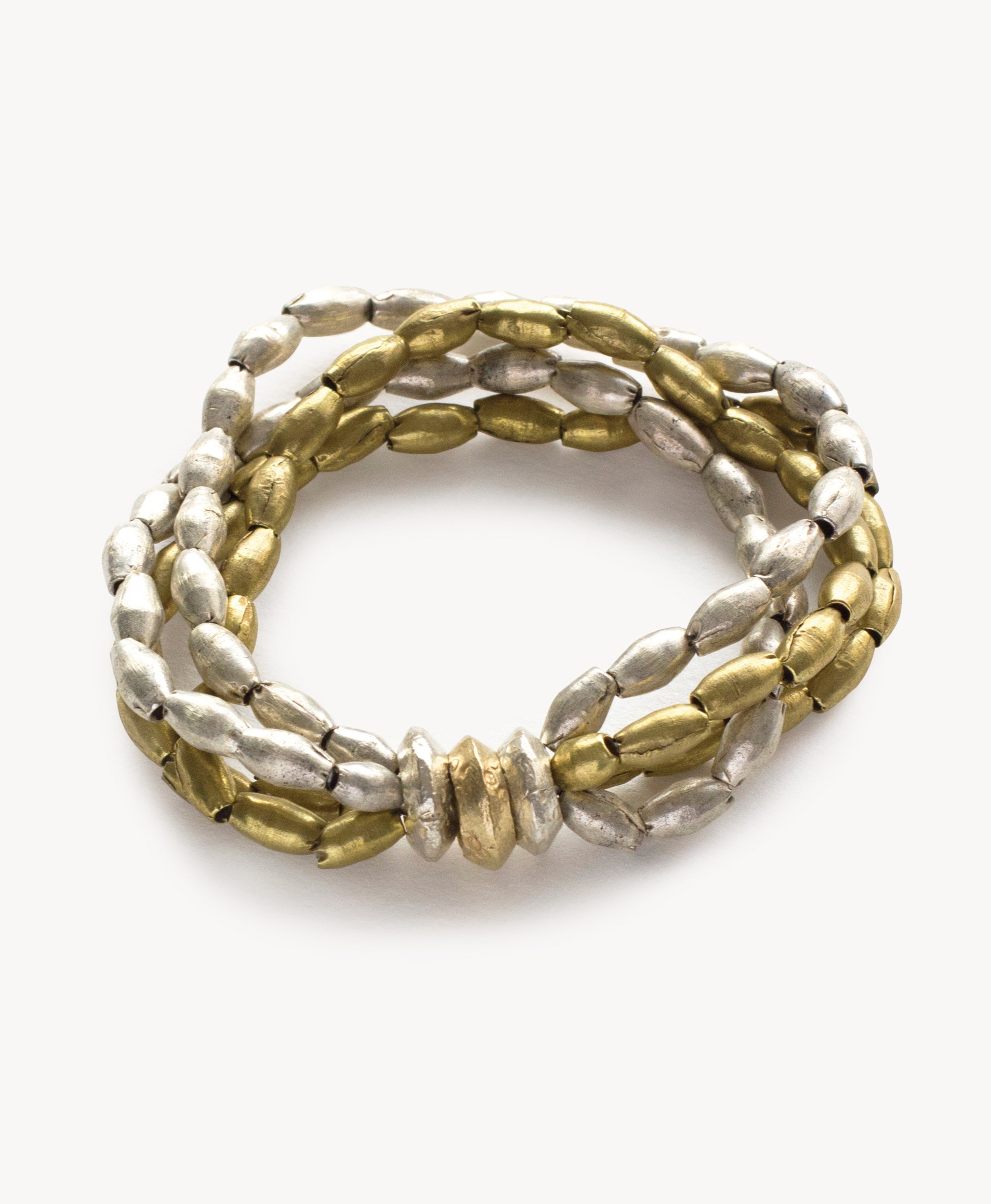
Noonday sells jewelry and accessories made by fair trade artisans around the world. Their products are beautiful, and each piece has a story. My personal favorites are my Callypso Earrings, made from sustainably harvested water buffalo horn, and the Tangled Beads Bracelet, which came from Ethiopia. Many of the pieces made by Noonday’s Ethiopian artisans are made from old artillery. The first time I held my bracelet in my hand, that reality hit me like a flood and I got choked up thinking about how something sad was being remade into something beautiful and providing economic opportunities at the same time. Noonday averages around $35 for a pair of earrings or a bracelet, and $50-ish for necklaces. Prices vary of course depending on the materials.

chocolate2. Endangered Species Chocolate:
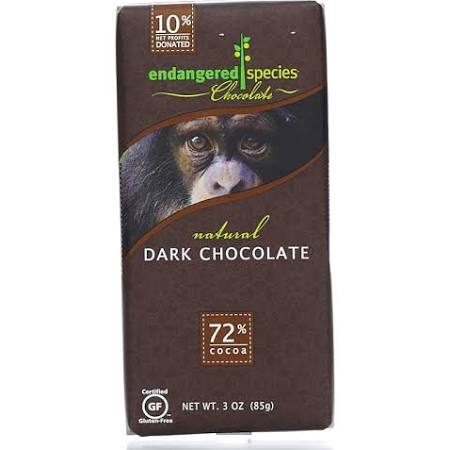
I’m a bit of a chocolate snob. I worked in a department store for a few years, right near the candy counter. When they got samples or if there were broken pieces in a shipment, we were the grateful recipients of some serious goodies. And once I got used to Godiva, I lost my appetite for Hershey’s. Knowing that chocolate is one of the products known for unethical production, I have really cut back my consumption. When I do indulge, my favorite is Endangered Species Chocolate’s 72% cocoa natural dark chocolate. It’s smooth and flavorful, and available at my local grocery store.

s0608892_sc7 3. Caribou Blend coffee:
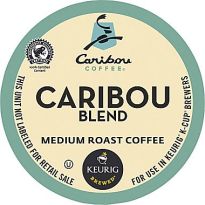
When I started learning about the importance of fair trade, I went looking for two things: chocolate and coffee. I knew that those were areas notorious for unethical production. We were buying our favorite Caribou Blend at Costco. We have a Keurig, so I’m already overpaying for coffee, and I was afraid to ask! But I was pleasantly surprised to find that many Keurig K-cups were available in fair trade varieties, and excited to discover that my go-to coffee was already Rainforest Alliance certified (Rainforest Alliance means that both the workers and the environment are cared for during production).

fair-trade-flags 4. Fair Trade Friday box from Mercy House, Kenya:
Subscription boxes are all the rage right now. For a fixed monthly fee you get a box of goodies to try – food, clothing, beauty, or accessories from different vendors. A few months ago, I joined up with the Fair Trade Friday subscription box from Mercy House. Every month I pay $31.99, and I get a package of goodies made by ethically treated artisans. My most recent box contained a cute purse and a pair of turquoise earrings. When I joined I assumed that I would be giving a lot of the items as gifts (at least that’s how I justified it to myself…) but I have wanted to keep most of the items for my own use!

So those are a few of my fair trade favorites! What fair trade companies or items do you love? Share in the comments! And if anyone knows of a company that makes sneakers (actual workout/running shoes, not casual tied shoes), please include that. That’s one area where I haven’t found an option I like.

And, by the way, the opinions in this post are entirely mine. None of the companies listed here have asked me to review their products or offered me anything to talk about their products (although, if they want to send me some freebies, I wouldn’t object! Lol)

Make sure you find your way to the Food Shelf Friday Facebook or Twitter page this week for a giveaway of a nice assortment of items from Mercy House’s Fair Trade Friday.