
 Happy Friday, friends! It’s setting up to be a hot weekend here in Minnesota (yes, really, we have those. It’s going to be humid and in the 90s). I plan to beat the heat by spending the weekend at work, as I usually do, and going to small group on Saturday. I’m also working on my son’s Scouting scrap book in preparation for his Eagle Scout court of honor coming up in August. I hope that wherever you are you are keeping cool and doing something fun this weekend.
For today’s post, I’m going to share another of my favorite organizations with you.
Feed My Starving Children
http://www.fmsc.org
Charity Navigator – 4 Stars
I first became aware of FMSC because they have a food packing facility near my home, and we went there as a work group back when I was doing childcare at a gym. I loved their mission to feed hungry kids around the world and the opportunity to participate hands-on by packing meals.
When you visit an FMSC packing facility or mobile pack event, you participate in manufacturing one of three nutritionally complete meal options. The most common, and my favorite to pack, is the original Manna Pack. They also make two potato-based formulas, Potato-W and Potato-D. The potato formulas meet the specific nutritional needs of weaning babies (W ), and people with chronic diarrhea (D), a serious and life-threatening condition for the malnourished. The reason I prefer packing Manna Pack is because the potato powder, the basis for the other two formulas, floats in the air and sticks to everything, including your skin and clothes. It doesn’t hurt anything and it washes right off, but I still prefer original Manna Pack.

Manna Pack consists of vitamins (a vegetarian, chicken-flavored vitamin powder), vegetables (dry veggie bits), soy* (a brown, crunchy, cereal-like puffed soy), and rice. Volunteers in hairnets and gloves gather around a table to fill bags with carefully-portioned amounts of each ingredient. They weigh the bags, and pass them off to a sealer (my favorite job), who pops the bag closed, removing as much air as possible, and seals it shut using a commercial sealing press machine (the sealer has to be 18+). A boxer (J’s favorite job) at each pair of tables boxes up the meals, keeps a tally of the boxes finished by his tables, and calls out cheers to keep everyone having fun and to let the warehouse volunteers know that they need to come get another completed box.
FMSC’s nutritionally-complete meals are paid for my donations, and packed by volunteers, and each meal costs less than twenty-five cents to produce. The boxes of food are loaded onto pallets and shipped to partner organizations around the world. These partners use the FMSC food in their various missions feeding orphans, refugees, and hungry children around the world. For example, some of Venture‘s work uses FMSC meals.
Packing sessions at FMSC take place six days a week, daytime as well as evening. A packing session lasts a couple of hours from the orientation rally to the closing (optional) prayer over the pallets (FMSC is a Christian organization, although they do not require you to have any faith connection to come and pack nor to receive meals). Children five years and over can participate, though there are rules for how many kids/per adult you can have in your group (and that number varies depending on the kids’ ages). You will have to wear a hairnet the entire time you are at the packing facility, and you cannot wear any jewelry, so it’s best to leave that at home. You can get more information on packing locations and rules on the FMSC website.
If Mobile Pack is coming to your area, or if you live near a permanent facility, I highly recommend you donate and/or try packing meals at Feed My Starving Children. It’s a great experience and a free outing for the whole family (or small group, book club, work group, birthday party, etc.). The organization is reputable, and their work (YOUR work) is life-saving.
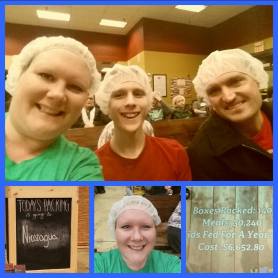
Have you packed meals at FMSC or another similar organization, or worked with a partner organization that distributes the meals to hungry kids? Tell us about it in the comments!
 Last week I shared with you some of the things I learned from a recent tour of a local food shelf, and led you on the journey that food takes from donation to dinner. This week I’m going to share with you more of the things I learned from my visit to the Anoka County Brotherhood Council (ACBC) food shelf and tell you the one thing the food shelf wants you to know.
 1. Drop off: So you have collected some things for the food shelf. The first step is to check their website for the hours in which donations are accepted (ACBC keeps separate hours for donations and services). When you arrive you will be greeted by a friendly volunteer or staff person who will weigh your donation and give you a receipt for tax deduction. Normally this is where you exit, but today we’re going to follow your donation on its journey through the food shelf.

 5. When the food bank is open to clients, they arrive and “shop” for the items their family enjoys and will actually eat. At ACBC the clients have to show a photo ID that proves they are residents of the food shelf’s coverage area, but they do not have to provide proof of their financial need. They follow the signs for their family size and collect groceries in a cart just like at a regular grocery store. This “choice model” results in less waste because the families select things that fit their taste and any special dietary needs such as gluten-free, low-sodium, or allergies.
 6. A staff member or volunteer bags the client’s choices and checks to make sure they stayed within the totals allowed for their family size. (Spoiler alert: the checkout total is always $0). Many seniors living on a fixed income rely on the food bank regularly for years, but most food shelf users come only once or twice, to help their family through a temporary setback or lean season.

 foodshelffriday.com