
Category Archives: Uncategorized

New Year’s Resolutions 2016

New Year 2016

Welcome back! I hope you had a wonderful time over the holidays with your loved ones and are ready to get back into the swing of things. I know I am!

As I mentioned last year at this time, I’m not a big fan of New Year’s resolutions. It feels cliché to make big plans and promises because the year on the calendar changed. We have all the best intentions, but most of us fail. And once we slip, we just walk away until next year. Yet something about the fresh clean calendar beckons. It’s the one time of the year when we collectively look at the future and wonder what it will bring us. We feel the weight of the financial and dietary strains of the holiday season and we hope that the new year will be better than the old – that we will be better than last year.

So last year I gave in and set some New Year’s resolutions that were focused on others instead of myself, and although I failed to meet the details of the goals I set for myself, I still feel that the exercise was helpful. All year I had this goal in front of me. All year I had this on my mind. I didn’t hit all the marks, but I did some good things.

My resolutions for 2015 were:
– Have a Food Shelf Friday dinner 50 of 52 weeks in 2015 – we hit 40-something. I stopped counting after the second one we missed…
– Pack meals at Feed My Starving Children 6 times in 2015 – we went twice as a family and I went once with a group from church.

Clearly I did not accomplish my goals. BUT…

– Our 40-some FSF meals mean 40-some families got a meal from the local food bank, my family kept the hungry on the front of our minds, and we did all this without going over our usual grocery budget

– Twice this year my family spent its togetherness time helping rather than spending or eating, and we helped pack thousands of meals.

Those are good things! And I learned a few things that will make 2016 even better. Getting my little family of three together for a whole evening is hard. Between Scouts, sports, church commitments, jobs, and school, we’re stretched. BUT, a packing event at Feed My Starving Children doesn’t have to be a whole family evenhttps://foodshelffriday.com/about/t. I can go on an afternoon by myself, or just J and I can go during the day in the summer. I really held myself back waiting for all the pieces to fall into place for my whole family to have an evening to dedicate to FMSC.

So, my resolutions for 2016:

  • Have Food Shelf Friday dinners 45 of the 52 weeks of the year.
  • Participate in packing events at Feed My Starving Children 6 times, with or without my family
  • Attend at least one hunger-related fundraiser
  • Volunteer at least 50 hours to hunger-related work (not counting the time I spend blogging)
  • Participate in some variation of Hope for Dinner twice in 2016 (the week before Easter and the week before Thanksgiving)

So I tried, and I learned and grew and stepped up my game for the new year. I’m calling that a win!

What are your resolutions for the new year? Share them in the comments for accountability and to inspire the rest of us!
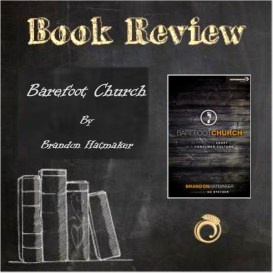
Book Review: Barefoot Church: Serving the Least in a Consumer Culture

barefoot.jpg

I’ve written before about Jen Hatmaker’s new book, For the Love, and the incredible community I found after getting rejected for her launch team. The surprises and blessings of this keep on coming. Recently Jen’s husband, Brandon Hatmaker, contacted the reject crew (AKA #the4500) and invited us to serve as the launch team for his second book, A Mile Wide, which is coming out in September 2016. This got me thinking that I should probably read his first book, Barefoot Church, which has been sitting on my Kindle forever. (Grad school kind of cramps my reading style…) I knew the only way I was getting through another book during the holiday season and end of the semester was to buy it on audiobook.

If you’re keeping score, I have now purchased this book twice. And after listening to it while I commute, I know I’m going to have to buy it again. I need a paper copy that I can reread, highlight, and mark with notes. Barefoot Church is so clear and practical, a how-to guide for pastors and lay leaders who want to make service not just a program, but an integral part of their lifestyle as individuals and as a church body. Hatmaker encourages us to overcome our own agendas and pitch in just to serve as Jesus commanded, not to build our attendance numbers or gain a reputation – or even to win people for Jesus. Of course we hope for open doors to share the gospel, but the church has gotten caught up in serving only so we can preach to those we help. We think of ourselves as better than the poor. We made better life choices and have it all figured out – in our own minds. The truth is that we don’t have all the answers, Jesus doesn’t call us to determine who deserves help, and we’ve done a lot of damage with these attitudes. He just calls us to help and serve in love. And that kind of selfless, compassionate service will open more doors to share the gospel than any “constructive criticism” or sermon can.

“They will know we are Christians by our LOVE” (John 13:35)
When you don’t know what to do, says Hatmaker, choose love…

 – Can’t decide if you should give? Choose love.
     – Can’t seem to swallow your pride on a foolish matter? Choose love.
     – Having a hard time forgiving someone? Chose love.
     – Rather keep your time for yourself than help someone in need?
        Choose love.
     – What would Jesus really do? Choose love.
         One of the reasons I believe in a barefoot church is because I believe
     in the power of love. Not just as a feeling, but as an action. Jesus was
     clear that we are to serve the least, and he was clear that it should
     always be an act of compassion. Our love should extend toward one
     another as well. And through that love, people will see God, not us or
     our actions.

The Hatmakers planted a church based on the premise that the Church can both gather people together and send them out to be salt and light in the local community. I want my worship to be more than just holding down a pew with my lazy backside. I want to be the active, serving hands and feet of Jesus. If you and/or your ministry want to live that life, I highly recommend Barefoot Church as a guidebook on your journey.

The Syrian Refugee Crisis

Syria

Watching the news this week, I knew I had to drop everything and talk to you guys about the Syrian refugee crisis. I’ve seen strong opinions online and heard some pretty significant rhetoric come out of politicians and political candidates

Let’s start at the very beginning (a very good place to start…). Remember the “Arab Spring” of 2011, when people took to the streets in some Middle East/Northern African countries to protest the regimes that were ruling their countries? Syria was one of the countries; people protested the Assad regime. The regime responded harshly, and it turned into a civil war. War brings death to more than soldiers and destruction to more than battlefields. Millions of Syrian families found themselves homeless and in constant danger, and they began to walk to the country’s borders in search of security in neighboring nations.

Thousands have made the dangerous and desperate decision to cross the Mediterranean to get to Greece. Boats capsizing on that journey have provided some of the saddest pictures of the situation as drowned bodies, including those of young children, wash up on the beach. I’ve promised you no guilt and sad pictures, so that’s all I’m going to say. (You can find the pictures easily enough if you haven’t seen them and want to.)

So that’s the background. It has been four years now and the situation in Syria is no closer to a peaceful resolution. Death and destruction are mounting. People are desperate and running for their lives.

I think we’re hearing about this more now because there is an election coming up, and because of the Paris terror attacks. Many Americans are afraid for our safety, and fear that radical elements will slip into the United States by posing as refugees. Opponents of the refugees coming to America say that American poverty, homelessness, and mental healthcare should take priority over foreigners in need.

On one hand, all of this makes sense. As much as my heart breaks for the refugees, events like the Paris terror attacks makes us fear for our safety, and there are plenty of Americans who need government aid to survive or get back on their feet. But on the other hand, where are these Syrian refugees supposed to go?

We Americans have so much, and we waste so much. If we got real about our spending and consumption we could provide for our own here in America, including our veterans, the mentally ill, the physically disabled, people displaced by emergencies, and others. We can take care of our own, we just have to get our eyes off ourselves, and let’s face it, many of the people who argue against the refugees because of Americans in need are also the people who don’t want to see money spent on Americans in need.

And as to our national security, we need to understand that refugees and those seeking political asylum are different. Asylees can come to the United States and, if proven safe and truly in need of asylum, they are fast-tracked to permanent residency. The refugee setup is different. Refugees are not in the United States until they are vetted, a process that can take up to three years.

The American immigration system has an annual maximum number of refugees that are allowed in every year. That number is fixed with the fiscal year and cannot be changed until the next cycle. That number was 80,000 per year until the economy went downhill. Then the number was lowered to 75,000, and then 70,000. Now President Obama is suggesting that we should increase the number to 85,000 per year. This has caused an uproar among people who fear for our safety and/or resources.

Many governors have declared that they will not accept more refugees into their state, but that’s not how immigration works. Immigration is handled at the federal level, and once accepted, the refugees are as free to move about the country as anyone is.

So there will be no sudden influx of refugees; the government will only accept the fixed maximum. And they will not be random unvetted people; all refugees will have to go through the background check process before they can set foot in this country.

For many of us, the ultimate question is what the Bible says about our responsibility to people in need. I’ve covered this in another post.

This refugee crisis has been a divisive issue on social media and website comment pages. People have strong, passionate opinions. Both sides want what’s best for America; they just have different ideas about what that is. We must continue to consider all the sides of this issue and be wise and responsible with our nation as well as the equally valuable lives of the Syrians.


I used a number of sources to compile this information:
INS: http://www.immigrationpolicy.org/just-facts/refugees-fact-sheet
World Vision: http://www.worldvision.org/our-impact/syrian-refugees?campaign=10680859
Bearing Drift: http://bearingdrift.com/2015/11/18/myths-vs-facts-in-the-syrian-refugee-issue/


Let’s talk! Leave your thoughts in the comments, but please remain civil. Anyone attacking other commenters personally or spouting unsupported venom will be removed.

Commodity Supplemental Food Program (CSFP) 101

CSFP 101

The Fair Trade Favorites giveaway has ended. Congrats to Twitter follower @berryman_beth!

Here’s another 101 quicky introduction to one of the American government’s food programs – the Commodity Supplemental Food Program, or CSFP. If you’re starting to get confused about all these programs and acronyms, never fear. I’ll be doing a roundup once they each have their own post. In the meantime, if you’re wondering about any of the other programs I’ve covered, check out the links!

SNAP (Food Stamps)
Women, Infants, and Children (WIC)
National School Lunch Program (NSLP)
UN World Food Programme (International)
Meals on Wheels (Non-profit, not government program, although they do distribute on behalf of programs that feed the elderly)
Head Start 101
The Emergency Food Assistance Program (TEFAP)

The Emergency Food Assistance Program (TEFAP), Food Distribution Program on Indian Reservations (FDPIR – a future post), and the Commodity Supplemental Food Program (CSFP) are all literal commodity distribution programs – they hand out food stuffs rather than money. TEFAP is available to a wide segment of the population in emergency situations. FDPIR is (obviously) specific to Native American Indian reservations. CSFP is specific to senior citizens, and it provides them with a monthly package of nutritionally-dense foods to improve the quality of their diets.

The USDA buys the food for the CSFP program at wholesale prices and distributes it to seniors 60 and older who are at or below 130% of the federal poverty income guidelines. The program is only available in 46 states, the District of Colombia, and on two Indian reservations. It will cost the U.S Federal government over $211 million in 2015, and provides food to over 573,000 people per month. The program is funded by the federal government (both the food cost and the administration expenses) but is administered by state and local government agencies as well as nonprofit organizations such as Meals on Wheels.

CSFP is an investment in our elderly population, because good nutrition helps seniors stay healthier and remain independent longer. This reduces the burden on Medicare/Medicaid and increases quality of life. Seniors are especially vulnerable to malnutrition because many of them live on a fixed income while grocery prices continue to rise. They don’t have a lot of opportunity to make more money, and physical limitations and apartment living impedes their ability to grow fresh fruits and vegetables.

If you or a loved one are 60 years old or older and might benefit from CSFP,click HERE to find out if your state participates in the program, if you qualify for benefits, and how to apply.