The Spiritual Journey – Walking with Jesus and Becoming More Like Him

Spiritual Journey

Housekeeping: We did have a Food Shelf Friday meal last week after all. In the very last meal of the week, Sunday night for dinner, we ate red beans and rice and canned corn. Our food shelf box got a matching meal. And we made it to Feed My Starving Children on Monday morning, so just like that my New Year’s Resolutions are back on track. Also this week we got a chance to see an amazing documentary called The Starfish Throwers. It will be out on DVD, Netflix, etc. this fall, and I’ll do a film review then, but in the meantime, check out the trailer.

I’ve been trying to eat “clean” lately. I need to lose some weight, but more than that I need to fuel my body with good nutrition. So I gave up fast food and sugar, and added more fresh fruits and veggies to my diet. But I find that there is no end to the things I can do to improve the way I live: quit drinking soda, switch to grass-fed beef, buy organics, stop buying products tested on animals, and don’t even get me started on the gluten debate! On and on – it never ends. Just when I think I’m doing something right, I discover a new way I’ve undermined my health, wasted precious resources, or contributed to injustice in the world. There is always a new improvement to chase.

My spiritual life is much the same. I remember when I was young, I thought that I was “pretty good” and wondered how people could say that they were always improving and becoming more like Jesus every day.  How low were they to begin with that they had that much “up” in front of them? But over the years I have realized that faith is not a to-do list of steps to achieve perfection. Faith is a complicated mixture of attitudes, perceptions, and behaviors. Although I may overcome some faults, I will also develop new ones along the way. I might obey all the “thou shalts,” and “thou shalt nots,” but that doesn’t mean I’m all God wants me to be.

I can ALWAYS be more like Jesus.

I can ALWAYS be more loving to my people, more kind to strangers, and more forgiving of my enemies.

I can ALWAYS become more aware of the needs around me, less focused on what I want, and more encouraging and helpful.

We need to embrace the lifelong process of drawing closer to God and becoming more like Jesus. Change can be hard, I know, but someday we’ll look back and be thankful that we’re not the same as we once were, just as I hope to one day look back and be appalled by the chips that are calling my name today.  Like the expression says, Jesus loves us just as we are, but too much to leave us that way.

Romans 12:1-2: I beseech you therefore, brethren, by the mercies of God, that you present your bodies a living sacrifice, holy, acceptable to God, which is your reasonable service. And do not be conformed to this world, but be transformed by the renewing of your mind, that you may prove what is that good and acceptable and perfect will of God.

2 Corinthians 4:16-18: Therefore we do not lose heart. Even though our outward man is perishing, yet the inward man is being renewed day by day. For our light affliction, which is but for a moment, is working for us a far more exceeding and eternal weight of glory, while we do not look at the things which are seen, but at the things which are not seen. For the things which are seen are temporary, but the things which are not seen are eternal.

Philippians 4:8: Finally, brethren, whatever things are true, whatever things are noble, whatever things are just, whatever things are pure, whatever things are lovely, whatever things are of good report, if there is any virtue and if there is anything praiseworthymeditate on these things.

Thoughts, inspiration, or scripture to share? Add a comment below!

Documentary Film Review – A Place at the Table

Film Review - A Place at the Table

Good Food Shelf Friday morning everyone! I have a new kind of post for you today, my review of the documentary A Place at the Table. It’s available on Netflix, as well as Amazon Instant Video (free for Prime members).

Before I jump into that, I have some exciting news. Within the last 10 days I have gotten confirmation that BOTH of the articles I recently submitted to online magazines were accepted! The (original) piece in Mamalode won’t be up until April 7, but the Everyday Windshield article (a reworking of the blog post on Meal Ministry) went up on their site this week. You can view it HERE. This is really exciting for me as I love to write and play with words, but have previously only done writing for school, this blog, and my on-again/off-again personal journal.

But back to the movie…

A Place at the Table was made by Magnolia Pictures, the people who made Food, Inc. It was directed by Kristi Jacobson and Lori Silverbush, and released in June, 2013.

The premise/thesis of this film is that farm subsidy programs spend billions of taxpayer dollars every year subsidizing corporate agri-business at the expense of American families. The subsidy programs were designed to end the Great Depression, but due in no small part to lobbyists, they were allowed to continue after the Depression ended, and they continue to this day. As family farms have given way to corporate food production, the subsidies intended for farm families have gone to these corporations as well. Additionally, the crops we subsidize are not fresh fruits and vegetables or whole grains. They’re mostly commodities like corn, soybeans, and wheat, which are used for livestock and manufacturing more than food.

The film primarily bounces back and forth between a single mom of two in Philadelphia, and a community in Colorado. There are also segments of a teacher in Mississippi introducing her class to nutrition after she herself was diagnosed with diabetes. A number of experts contributed, including healthcare workers, nutrition experts, a chef, and a legislator (Rep. James McGovern, D, Mass.).

In 1968, CBS aired a documentary called Hunger in America which was extremely influential and led to the virtual end of hunger in America. When the recession hit in the 1980s, all of that progress was undone as the number of individuals in need of assistance skyrocketed while funding decreased. In response, emergency charities (food banks and soup kitchens) sprung up or expanded all over the country to meet the need. The film applauds these private programs for the work they do in communities across the country, but it argues that charity is a band-aid, not a cure.

A few things the film does well:

They did a nice job explaining that obesity and hunger are not opposites; they’re “neighbors.” When a family has a very limited food budget, processed, shelf-stable, nutritionally barren foods are available more readily and for less money than fresh fruits and vegetables.

The film hit on the danger of nutritional deficiency in the first three years of a child’s life. Even short-term periods of malnutrition can have a permanent impact on a child’s cognitive development and some of the potential that is lost cannot be recovered.

They point out that legislators, by and large, cannot relate to the challenges of hunger. Without personal experience with the stress of trying to feed a family on very little, the statistics mean very little to them (and to many of us watching the film). School lunches and other government feeding programs are just budget items to them. There is a lot of talk about school lunch programs in the film. They describe the immense challenges that schools face in making healthy food for kids on a budget that hasn’t increased (except to keep up with inflation) since the 1970s. I know from my personal grocery shopping experience that produce has gone up a lot higher than just keeping up with the inflation of the dollar!

They talk a little about the larger cost of hunger in America. It’s not just about food stamps and government programs. Hunger costs taxpayers who foot the bill for malnutrition related conditions in the population. Healthcare, disability, unemployment, therapies and special education programs all require more resources in a population with high numbers of malnourished. The film argues that more money for hunger relief up front becomes less money for other social services later.

A few issues:

The film is very political. One reviewer on Amazon called it “Marxist Trash and Poison mixed with Truth.” It leans left. Way left. The implicit villains are Republicans and industry. There is no consideration for how these single moms became single moms or where the kids’ dad(s) are. What about personal responsibility? This is a tough question for me. On one hand, I believe in personal responsibility: in not having kids you can’t feed, in working for what you need. On the other hand, I know that things happen. Illness, injury, death, job loss, inflation, etc. A number of things out of a person’s control can take them from responsible to destitute. I don’t really have an answer for this. All I can say for sure is that children cannot control where and when they’re born. Punishing the kids for the failings of their parents is misguided, unfair, and dangerous.

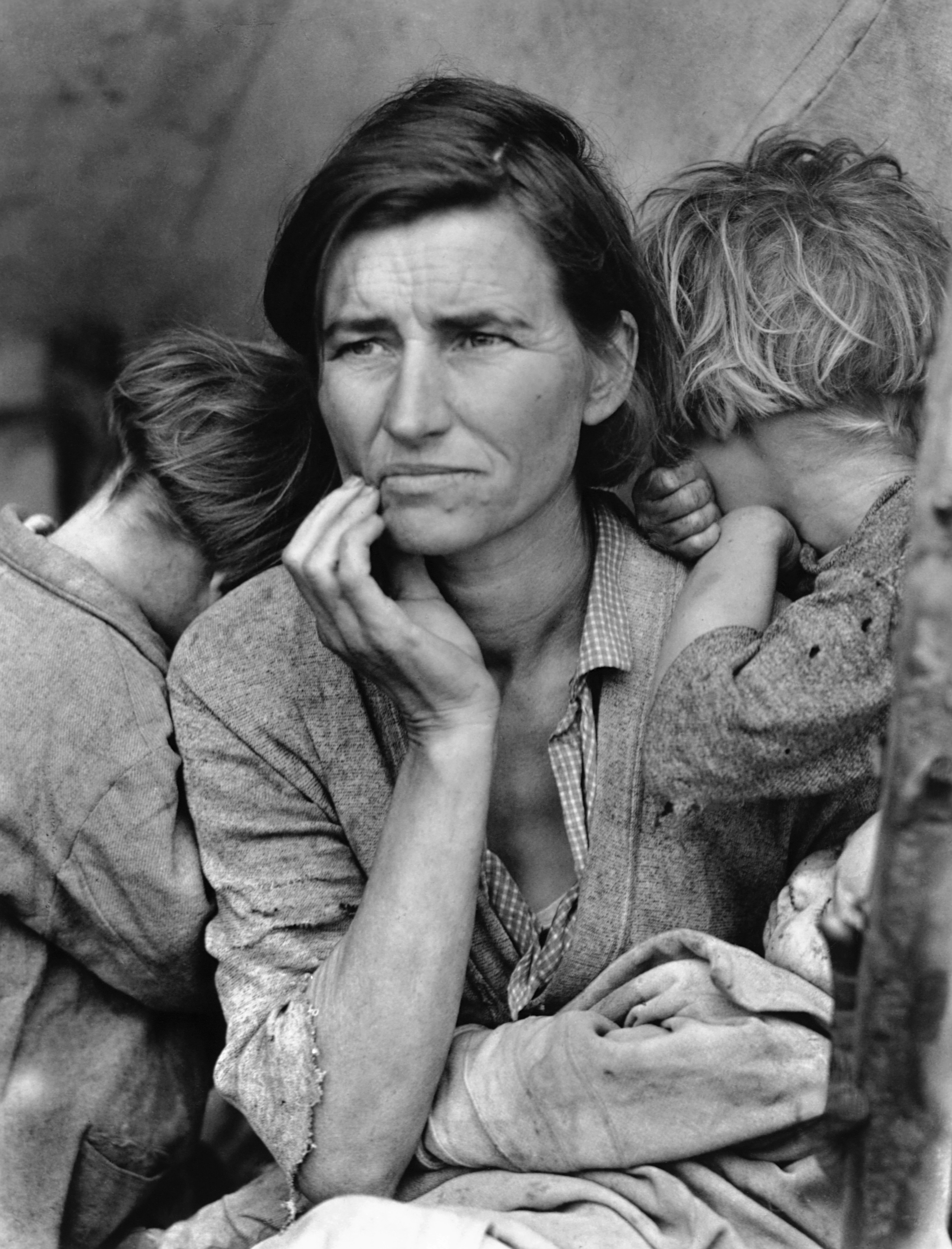
Editing choices presented the story they wanted you to have, not necessarily the full story. In Colorado, ten-year-old Rosie introduces us to her life. In the story she mentions sharing a bed with her sister, but we never see the sister. Her mom talks about her job as a waitress, but we never hear anything about dad. Grandma is interviewed several times, and she mentions that 7 people live in their house, yet we are introduced to only the three. Clearly we are not getting all the information. Perhaps too many characters would have been confusing, I don’t know. All I know is that there is a lot that went unexplained, which made me wonder if we’re getting truth or fabrication. It’s like the famous Depression photos taken by Dorothea Lange. She is famous for the picture “Migrant Mother” (pictured below). Lange intentionally left dad out of the photo because it was more powerful and heartbreaking without a big, strong man in the picture.

by Dorothea Lange

As many reviewers on Amazon have pointed out, there is no mention of one simple solution to life without produce – gardening. Community gardens, deck and window plants, etc. – there are a lot of options to do something no matter what your circumstances, and it costs very little. It’s not a total solution, but it’s an area that went completely unexplored in this film.

Conclusion:

I’m glad I watched A Place at the Table. It wasn’t the definitive exploration of hunger in America, but it made many good points. My biggest takeaway is that I am going to make sure my food shelf donations aren’t junk food; I don’t want to be another source of the problem. I am also more interested in the debate over school lunches and funding the school lunch program.

If you are an open-minded individual who wants to understand some of the complex issues of hunger in America, I recommend the movie. If you have strong, inflexible political views on either side, you will either love it as proof of your ideals and be blind to its imperfections, or you will hate it as leftist propaganda and see only its imperfections. If you can go into it with the mindset that it is not perfect but it has things to teach me, I think you’ll gain some valuable insights. I know I did.

Follow-up on my New Year’s resolutions (see that post HERE): I set a goal of packing meals at Feed My Starving Children 6 times in 2015, and I’m falling behind. I’ve only been there once so far, and have scheduled a visit for next week. There is plenty of year left, but I need to get in gear! My other resolution was to have a Food Shelf Friday dinner once a week 50 out of the 52 weeks in 2015. I’m going to miss my first one this week. Someone in my house has to be somewhere every. single. night. We might be able to share a family meal on Sunday night (in which case I have a box of red beans and rice and two cans of corn ready to go for both us and the food bank), but if it doesn’t work this will be our first week without an FSF dinner since Christmas. I hate when life gets in the way of how I want to live… On that deep thought, I’ll let you go. Have a wonderful week, and don’t forget to share your thoughts in the comments!


UN World Food Programme 101

UN World Food Programme

Are you guys enjoying the “101” series? I have learned a TON researching for these monthly posts giving a basic rundown of different government feeding programs. If you want to go back and check out the other entries in this series, see: SNAP (food stamps) 101, WIC (Women, Infants, and Children) 101, and NSLP (school lunch program) 101.

This month we’re looking outside the U.S. at the biggest food relief program in the world – The U.N. World Food Programme (WFP).

The United Nations World Food Programme’s mission is to “Fight Hunger Worldwide.” From their website: “In emergencies, we get food to where it is needed, saving the lives of victims of war, civil conflict and natural disasters. After the cause of an emergency has passed, we use food to help communities rebuild their shattered lives.”

The WFP was founded in 1961. It was an American idea, and the United States has always been its biggest supporter, paying about 1/3 of the WFP’s annual cost. The other 2/3 are raised by donations from other governments around the world as well as corporate donors. The UN oversees the WFP but does not provide any of the funding.

There are 14,000 people around the world working for the WFP. They provide aid to about 80 million people per year in 75 countries. Much of the aid is in the form of emergency supplies in areas affected by man-made and natural disasters. They also teach farming skills and provide assistance to small farmers in developing nations.

This program, and foreign aid in general, are not without controversy. In an interview with German magazine Der Spiegel, Kenyan economist James Shikwati said, “As absurd as it may sound: Development aid is one of the reasons for Africa’s problems. If the West were to cancel these payments, normal Africans wouldn’t even notice.” Shikwati’s argument is that much of the foreign aid never gets to the people who need it. Instead, the capital is siphoned off by corrupt officials and used to bribe and control the population. Additionally, direct aid floods the market with free goods, driving down commodity prices to the point where local growers are pushed out of the market. Summed up and (undoubtedly) oversimplified, Shikwati’s argument is ‘give a man a fish and fishermen can’t make a living.’ Many respected economists, including Jeffrey D. Sachs of Columbia University, disagree with Shikwati’s assessment, but he raises an interesting argument.

Shikwati’s argument applies best to chronically impoverished developing nations with corrupt leadership. Many of the nations benefiting from the WFP are not always desperately poor. They need emergency assistance because corrupt régimes cut off and starved out segments of the population, invading armies damaged their food systems, or natural disasters devastated their land. The UN World Food Programme provides quick relief at places like refugee camps, where there is no local market to flood, and the aid is generally hand delivered to the population in need, not given to the potentially corrupt government officials who could use it to further their own agenda.

I’ll close with a quote from a man interviewed in “War and Hunger,” from the CBS network program 60 Minutes (Link below. I highly recommend watching the segment, it focuses on the WFP’s work in Syria, though it does contain some alarming and sad stories). The subject remained unnamed to protect his safety and the safety of his family:

“(Starvation) can destroy your soul, your mind, your beliefs, before it can destroy your body. Nobody in this world, no matter who he is, deserves to die from hunger. Nobody.”

Links to sources for more information, including the Shikwati interview, Sach’s rebuttal, and the 60 Minutes video segment:

UN World Food Programme

UN Food and Agriculture Organization

Der Spiegel interview with Kenyan economist James Shikwati (in English)

NY Times Article reacting to Shikwati’s Der Spiegel interview

Charity Navigator assessment of U.S. branch, WFP USA

“War and Hunger” 60 Minutes (CBS) video on WFP and Syrian refugees

Waste Not – Want Not: Regrowing Food from Kitchen Scraps

zombie gardening

Food-That-Magically-Regrows-Itself-1080x3225from Whole Foods via Cookingstoned.tv

Spring is in the air, and I catch myself daydreaming about sun on my back and dirt under my fingernails. I can’t wait to get my garden started – it’s hard to hold out for frost-free nights! Gardening is a great hobby; it allows you to commune with nature, learn about the environment, and feed your family whole, seasonal foods at an affordable price. Nothing the grocery store has to offer can compare with the flavor of my garden’s fresh offerings.

I know some people don’t have the space, knowledge, or inclination to garden. Getting started seems like a big commitment: sod removal, fence building, etc. This week we’re going to explore one way to cut those costs – plants that you can grow from food scraps. No digging up the lawn, no buying expensive equipment or even seeds. Some grow right in the kitchen, and others will need a pot or garden plot. It’s a fun and affordable way to cut your gardening costs and produce budget by using the same purchase over and over again!

1. Herbs: Basil, rosemary, and mint (and probably many others!) can be propagated and planted – a good return on that overpriced bunch of herbs from the grocery store! Pick a longer stem from the bundle and trim off the bottom and top leaves right where they meet the stem. Place the bottom of the stem in water and leave it. In about a week you’ve got little roots forming. Once the plant is substantial enough, you can transplant it to dirt. Step-by-step directions can be found on A Blossoming Life blog.

2. Celery, Romaine, and Other Bunches: When you bring home a bundle of celery, romaine lettuce, bok choy, or other veggie bunches, the first thing you do is hack off the stump end and toss it, right? I know that’s my process. But the root end of those plants can continue to produce! Cut off the stalks, and place the root end cut side up in warmish water. Every day, change out the water and within two weeks you should see new growth out the top. After 10 days-2 weeks, the plant is ready to be re-planted into soil. Step-by-step directions and pictures can be found on One Thousand Words blog. I love how she explains that veggies aren’t dead yet! Another post I saw referred to this regrowth as “zombie gardening.” That might be the hook I need to get my teenage son to participate and eat more veggies…

3. Potatoes and Sweet Potatoes: I can’t tell you how often I find the potatoes in my pantry sprouting and starting to rot. Commercially grown potatoes are cleaned before they’re sold, and that starts the decay process sooner than it does in nature. To use that growth rather than throw it out, cut the potatoes into pieces no smaller than a golf ball, making sure each piece has at least one eye. Voila, seeds! Kevin Lee Jacob’s site, A Garden for the House has a whole article on planting, growing, harvesting, and storing potatoes.

4. Onions and Garlic: Another veggie with a re-grow-able stem end is green onion. They’re super easy to grow, just cut off the tops you’re going to use, and put the stem ends in water. They’ll just grow back and you can keep clipping and regrowing from the same set of stems. Other onion varieties and garlic can also be regrown. Kalyn’s Kitchen has a good look at green onions. From Simple Daily Recipes, the directions for garlic. From Instructables, onions.

5. Seed-bearers: Bell peppers, lemons, apples, avocados, and other seed-bearing fruits and veggies can easily be regrown. Just remove the seeds, and let them dry before planting. Of course, apples and lemons are going to have to grow a whole tree before you get fruit from them, but if you’re interested in that project, you probably already have the seeds right in your kitchen.

A number of blogs and how-to sites have covered this topic very well, and they even offer info on some of the more complicated plants you can regrow, like pineapples:
DIY & Crafts
Simple Household Tips
Happy Money Saver

A few other thoughts on kitchen scraps:

*Veggie scraps, produce that’s about to turn, and chicken carcasses simmered together become chicken stock. This is virtually free and it’s much healthier than the expensive canned stock available commercially.

*Composting means using biodegradable food scraps and yard waste to create nutrient-dense soil. There are many how-to’s online if you’re interested in making your own nutrient-rich soil.

*Increase the nutrient density of your garden soil by burying banana peels beneath your roses or tomatoes, or by sprinkling crushed egg shells under your tomatoes. More info on Daddykirb’s Farm 

Waste not, want not! Have a happy spring, and don’t forget to share your scrap-recycling and gardening ideas in the comments! (Disclaimer: I’ve linked to a lot of blog posts that do a great job describing “zombie gardening,” but in most cases that post is the only thing I’ve read on the site. I’m not necessarily endorsing the whole blog, you’ll have to check it out for yourself.)